Coatings
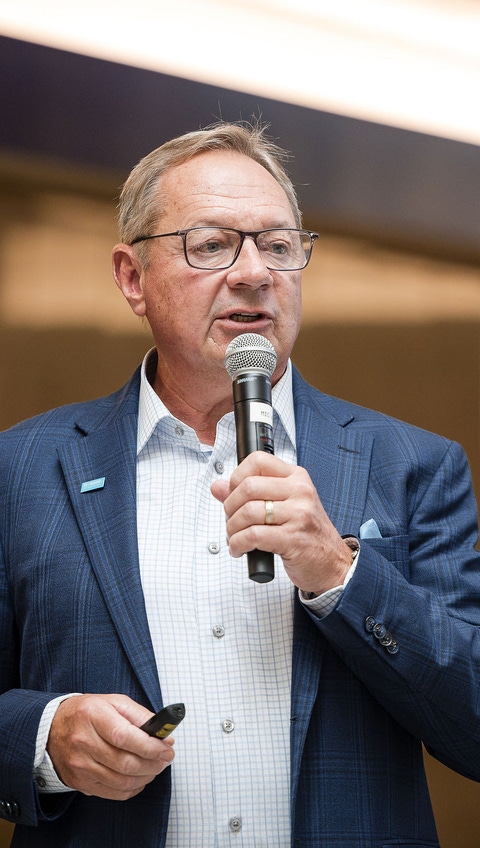
Beyond SurFACES – Meet John Van Antwerp
A four-decade career of innovation and partnership
In a candid conversation with John Van Antwerp, he shared insights from a remarkable journey that shaped his four-decade career in the automotive coatings industry. From his early days working in the laboratory to becoming a driving force behind major technological advancements in paint systems, John’s story is one of opportunity, innovation, and competitive spirit – and one that will draw to a close at the end of this year, as John prepares to retire following his impressive career.
Beyond SurFACES – Get to know our winning team
At BASF Coatings, we are driven by passion and science to always go beyond the surface. In our new series, Beyond SurFACES, we introduce you to the talented individuals who make it happen. From developing innovative coatings to creating sustainable solutions, our winning team is at the heart of everything we do. Meet John Van Antwerp and learn about his impressive four-decade career in the automotive coatings industry.
Want to be part of the journey?
John’s career in automotive coatings began unexpectedly during his chemical engineering studies, when an opportunity at Inmont set him on a path that would span decades and major industry change. After Inmont became part of BASF, John played a key role in developing and launching North America’s first waterborne basecoat technology, including a pivotal assignment in Montreal supporting its introduction at the General Motors (GM) plant in Sainte-Thérèse, Québec.
Over the next 20 years, John advanced through technical leadership roles before transitioning into commercial account management in 2005, where his competitive drive and relationship-building skills helped significantly grow BASF’s GM North America market share. His career has been marked by innovation, teamwork, and a relentless pursuit of excellence, reflected in numerous GM Supplier of the Year and Over Drive awards.
Ironically, John is one of the very few people who worked for the company before it was BASF and will retire from it after it is no longer BASF.

Can you talk a little about the importance of building trust and forming partnerships with our customers?
It starts with customer focus. You need to understand what is most important to the customer, what it is that they are looking for, and how you can align that with our priorities. Sometimes it takes a while to get a balanced benefit out of relationships; you may need to invest with a focus on future potential.
Once you build trust with a customer and they see how you are adding value to their operations, they are more willing to address your needs because they respect the business relationship.
Strong relationships, help you to better navigate the business. Building relationships for today, next year, or five years from now is important. People change, they get promoted to new roles or even change companies, so building relationships across your internal team, and across the customer teams is a key to future success.

Could you explain the importance of keeping a focus on the long game?
The automotive business is certainly dynamic and has seen a lot of changes since 1985 when I first started. Processes have evolved, and the pace of innovation continues to accelerate. It is also cyclical to a degree. So, you need to closely watch the industry and be aware of the downturns – and then be ready to take full advantage of the upturns. Clearly you must make moves to weather the downturns, but it is also important to not overreact during them. Winning only during the good times, or the upturns is also not enough. You must stay focused on supporting our customers through headwinds. That is how you differentiate yourself from other suppliers and win in the long game.

You've been with the company through many phases of the OEM/supplier relationship over 40 years. How would you characterize the dynamics today?
When I first started, success in negotiations was significantly based on personal relationships. Then there was an extended period featuring intense negotiations where OEMs were focused on maximizing cost reductions, causing significant pressure on the supply base.
It became clear that this was not a sustainable approach. Emerging from that era is where we are today with many of our customers. We focus on a mutually beneficial partnership which is sustainable for both parties. The automotive coatings technologies are quickly evolving, and it takes the collective capabilities and knowledge of both the OEMs and suppliers to identify the best solutions for future success. This technological evolution has paved the way to a far more collaborative coatings industry. One that is better for suppliers, the OEMs, and most importantly the customers who purchase their vehicles.
Early on, I felt every project was so crucial—if something I was working on failed, it felt like everything would collapse. But I’ve learned there is a dedicated team that you can rely on, and even if we fail, we’ll address the problem and identify a solution by working together and focusing on the customer.

What other big changes have you witnessed over your 40-year career?
The OEM coatings market volume has been reduced significantly since I began my career. A couple of factors have driven that reduction. As the OEMs consolidated production facilities and became more efficient, the number of plants and paint shops decreased. As an example, in the mid-1980s GM had more than 30 assembly plants in North America. Today, there are half that many.
In addition, as new transfer efficiency innovations and environmental practices have been adopted, the amount of paint used per vehicle has gone down significantly.
Those two factors, and others, have led us to change the way we approach our business as well. In the past, a share of a larger market that was equally divided among the coating suppliers may have been sustainable. Fast forward to today…the reduction in total coatings volume has driven increased competition and a need for a higher percentage of the market share to remain sustainable.
You’ve coached hockey and lacrosse for many years. How has your coaching experience influenced your leadership style?
Coaching hockey and lacrosse for many years taught me that different people respond to different leadership styles. You must adapt your approach to an individual’s strengths, needs, and determine what motivates them. Managing large teams in the lab, I drew on those lessons to try to motivate and support each associate effectively. So, I would say that my leadership style is fluid, I try to adapt it to the type of person I am leading.
What advice would you give your younger self?
I’d tell myself not to take my failures so hard. Early on, I felt every project was so crucial—if something I was working on failed, it felt like everything would collapse. But I’ve learned there is a dedicated team that you can rely on, and even if we fail, we’ll address the problem and identify a solution by working together and focusing on the customer. It’s important to be driven, but also to maintain perspective.

How did you maintain work-life balance, and what are your plans for retirement?
I wasn’t always great at work-life balance. Coaching my kids helped to decompress after work. Now, I’m looking forward to spending more time with my wife, our three children and our seven grandchildren—all in Michigan—coaching their sports, playing golf, and simply being present.
Family has always been central to me, and retirement is a chance to enjoy that even more. I also hope to travel more and spend time with friends.
What do you hope your colleagues and friends say about your legacy?
I hope people say I showed up every day, worked hard, and did things the right way. It’s bittersweet to leave behind so many memories, but I’m excited for the next chapter. I’m grateful for the support, mentorship, and friendship of so many wonderful people. Forty years is a long time.
Treating people with respect and building strong relationships has always been at the core of my approach. My ultimate legacy is my family and friendships, but I also hope I’ve left a positive mark at BASF—helping grow the business and providing a strong example for those who follow.


